When I was working as a college advisor, I got very good at spotting patterns in other people.
I could look at a student's classes, side projects, random interests, and half formed ideas and say, here's the through line. Here's who you are when all of this is put together. Here's a story we could package for colleges.
My own understanding of self at the time was a different story. My resume at 24 was full of information fragments. Viral content I had created, both in school and on my own. A small advising business I started on the side. Two founding teams I had joined at my marketing agency.
Despite knowing those things about my past, I never thought to call myself entrepreneurial. Nobody had ever pointed out that I had a pattern of creating things from scratch. While I could see identity in other people, I only saw bullet points in myself.
Now as a founder looking back, it's easier to make sense of my story. As Steve Jobs said,
"You can't connect the dots looking forward; you can only connect them looking backwards."
That has been true for a long time. It was true when we didn't have the tools to see patterns at scale. AI changes that.
What if technology could help people see their patterns earlier? The ways they tend to think, start things, solve problems, and bring others in. The strengths they use so naturally they never think to name them.
What would change if people had language for their identity before they made their biggest decisions about school, work, and what they are capable of?
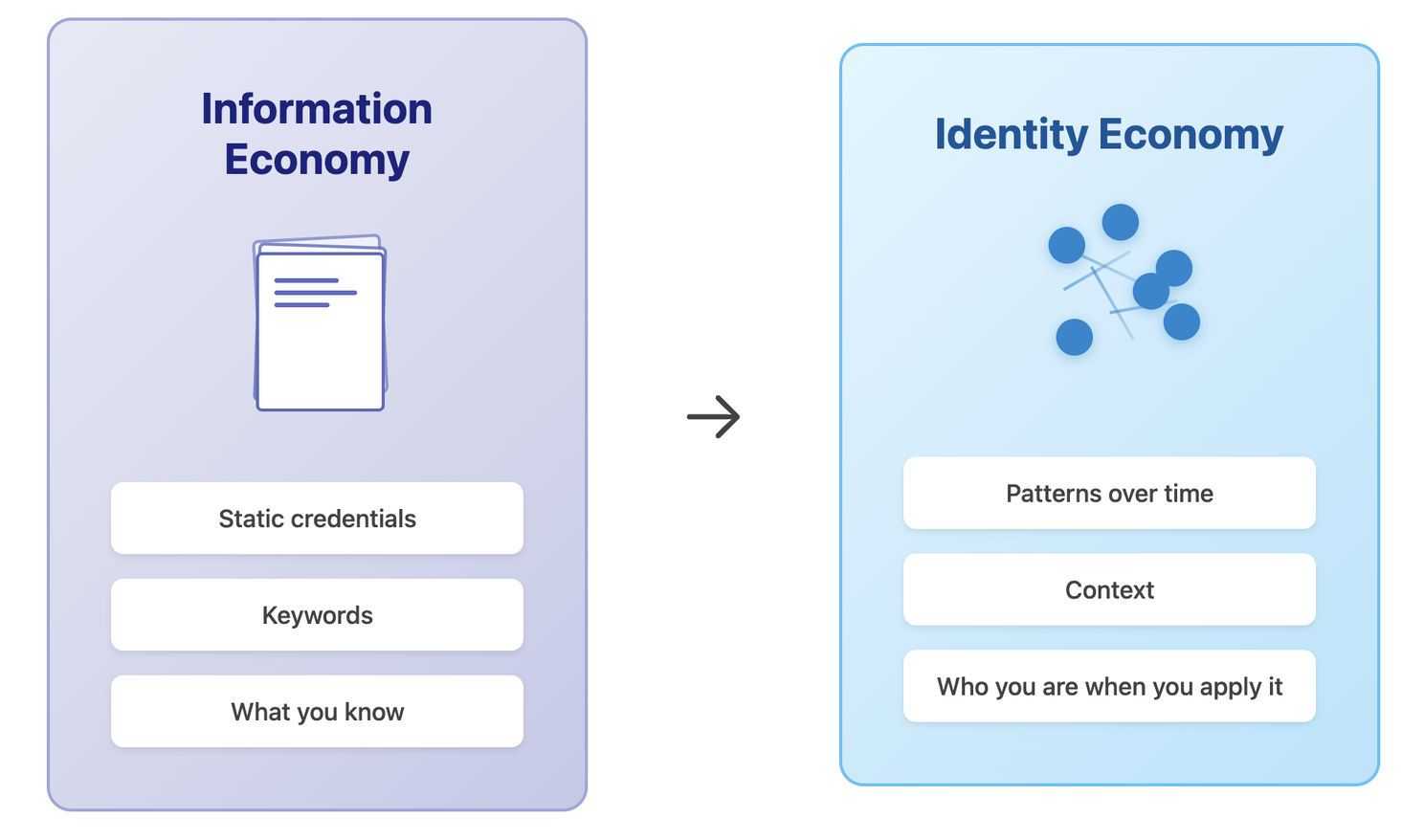
The systems we built for work were designed for an information economy. Resumes, portfolios, talent databases, keyword scanning software. That infrastructure made sense when information about people was the scarcest signal.
Now information is abundant and skills can be learned on demand. The edge is moving somewhere else. What we label soft skills are actually patterns in how someone thinks, decides, and works with others. In a workforce that is less linear and increasingly shaped by AI, these patterns are becoming the core signal for talent. And yet our systems barely touch this.
We are entering the identity economy.
An economy where the primary unit of value is not just what you know, but who you are when you apply it. Your patterns over time. Your context. The story that connects them.
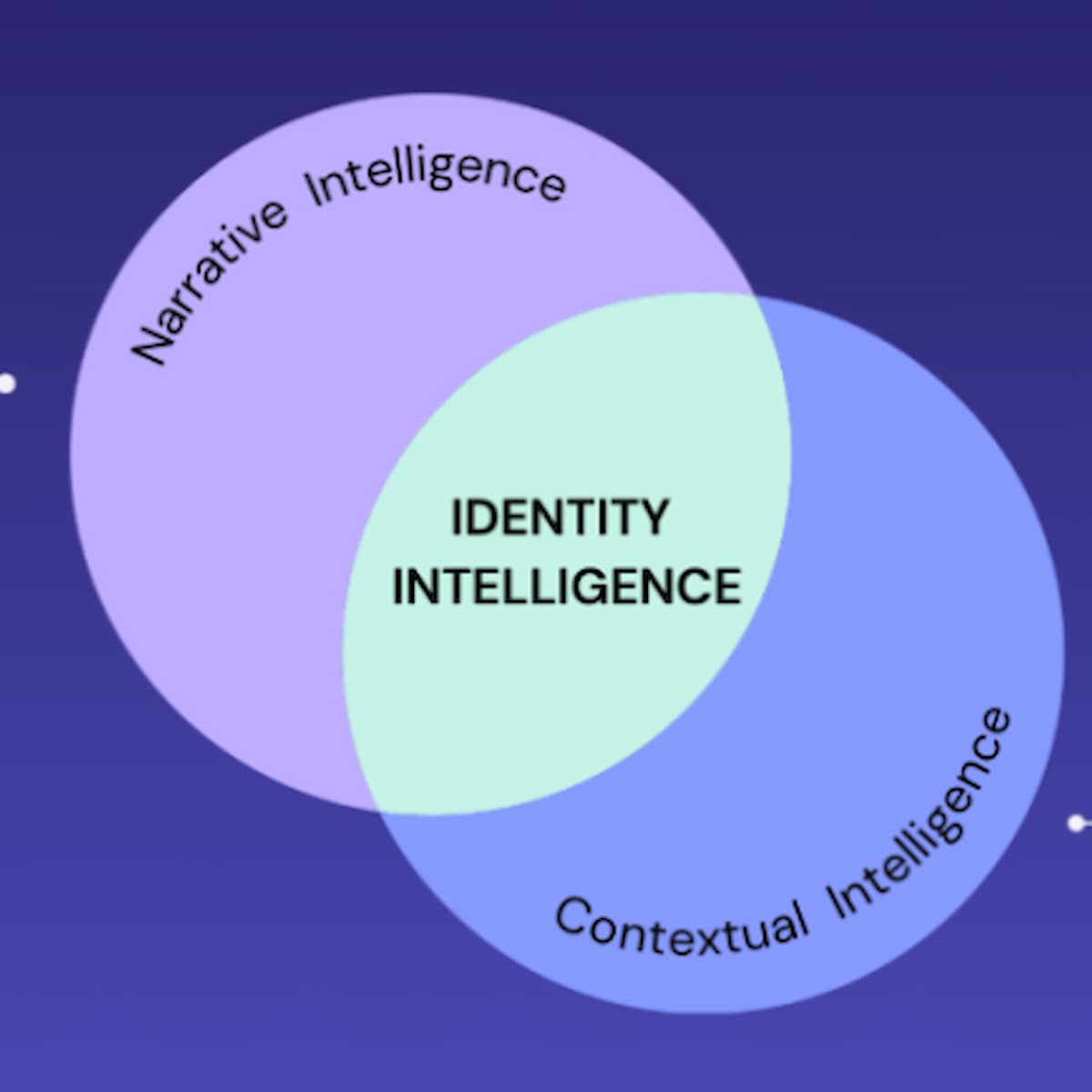
This is why we're building Identity Intelligence™ at ESAI 🔮 . It's not a single product. It is an ethos for how people and institutions should think about development in an identity economy. It sits at the intersection of two things:
Narrative Intelligence™
The ongoing work of helping someone discover who they are across values, interests, skills, goals, and work style, without assuming they already have the language for it. This means new ways of asking questions, surfacing stories, and designing interfaces that make self discovery feel natural.
Contextual Intelligence™
The recognition that identity is not static. The story you surface depends on the moment, the role, the team, and what is needed to both access that opportunity and thrive inside it. ESAI's agentic AI make's it possible to surface opportunities in real time, then surface the right story for the right context just as dynamically.
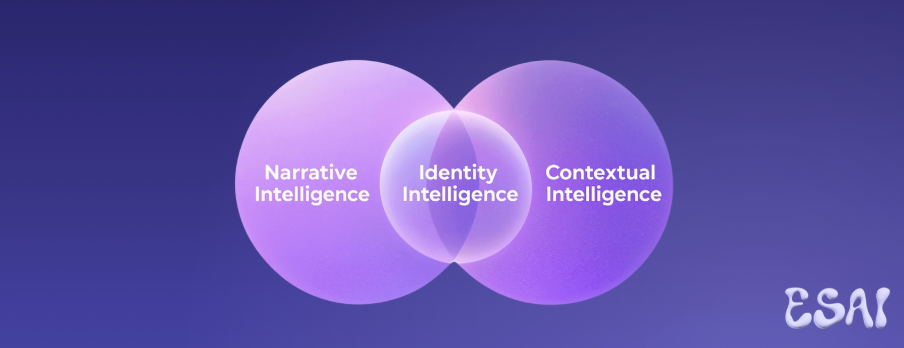
Identity intelligence lives at the intersection of those layers. A core source of truth about a person, paired with the ability to express the right parts of that identity as the world around them shifts.
It starts early. It is never finished. And it will require colleges, career systems, and employers to rethink structures built for information in a world that now runs on identity.
If you are part of a high school, college, career, or talent system trying to prepare people for what comes next, follow along for more. The next major layer of tech will not just organize what we know. It will shape how we understand who we are and how we share that in context.