
We Can’t Expect Clarity Without Teaching Reflection
Over a decade ago, Massachusetts Institute of Technology admissions published a blog post called “Applying Sideways.” It went viral because it challenged the idea that there’s one perfect formula to get into a top school. The message was simple: don’t engineer your life for an outcome. Study hard. Be kind. Pursue what genuinely interests you. If that aligns with MIT, great. If not, you still spent high school doing meaningful things.
I’ve always loved that framing. But in my experience as a college advisor, there was a quieter problem underneath it. “Pursue your passion” assumes you know what that is. Most don't. For years, sitting across from students, I heard versions of the same thing:
“I’m not really obsessed with one thing.” “Nothing about me is that unique.” “I don’t have a spike.”
These students are almost never lazy or uninteresting. They just haven’t been taught how to identify or articulate what makes them tick.
Schools don’t explicitly teach self-discovery and existing college/career platforms often skip straight to decision-making. Students are asked to pick majors, outline five-year plans, define their core values, and articulate their life goals, all without anyone first helping them surface the raw material. That’s where I think we need a second version of “sideways.”
Applying sideways was about not chasing the outcome directly. Sideways Self-Discovery is about not chasing identity directly.
Instead of asking a 17-year-old, “What are your core values?” a question many adults (including myself) would struggle to answer concisely, I learned to approach core aspects of a student's identity indirectly.
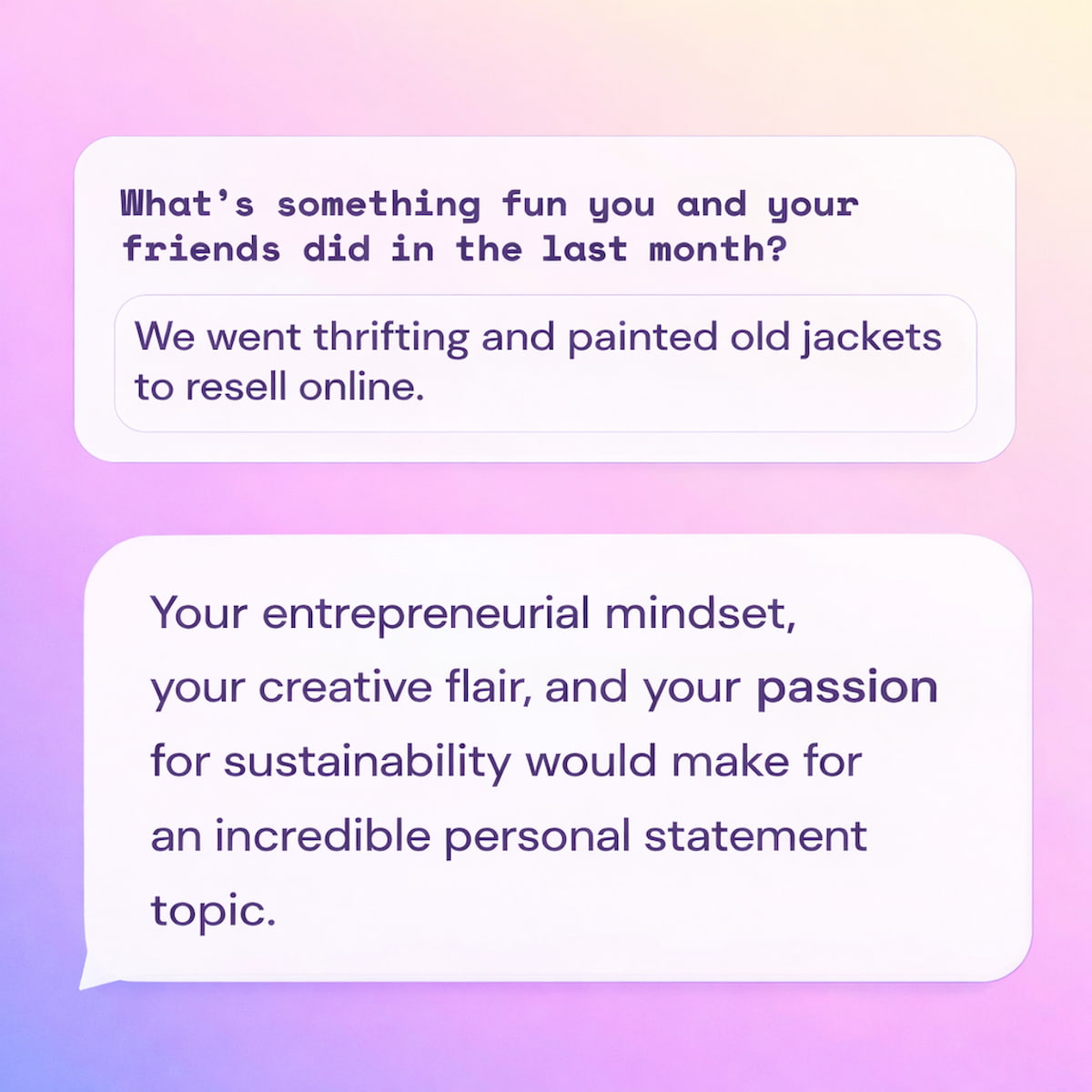
Memory is easier than identity language. When I stopped asking students to define themselves and instead asked more journalistic, but Gen-Z friendly, questions like:
"What rabbit hole did you go down on YouTube or TikTok recently?" "What did you and your friends debate at lunch yesterday?" "What was your favorite part of the football game last weekend?"
… the answers came faster. And they were more honest.
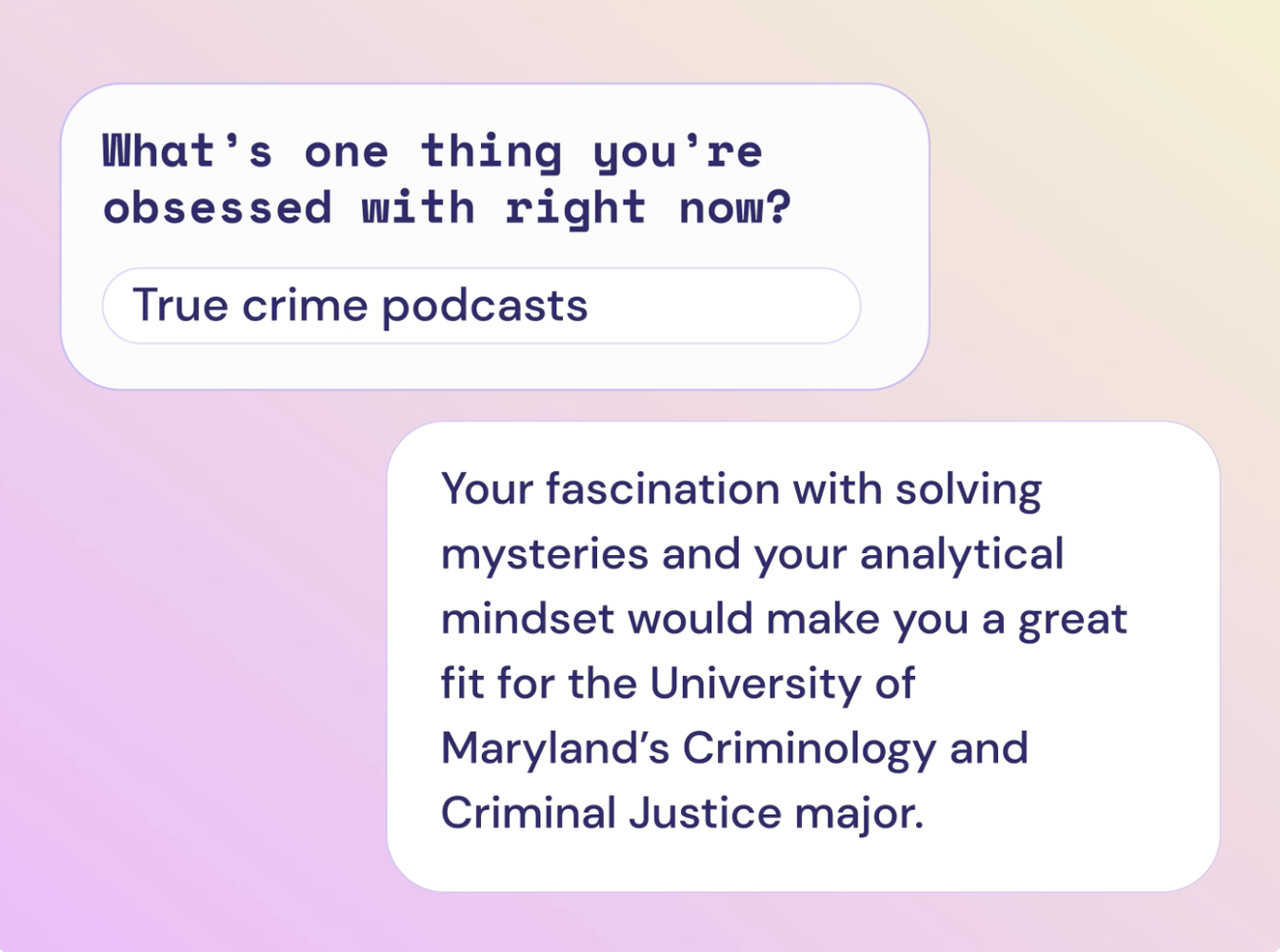
A student once told me she loved going to football games because she followed the players’ backstories — how they trained, where they grew up, how they handled setbacks. She thought she was just talking about sports. What I heard was someone deeply drawn to narrative, to human motivation, to the psychology behind performance. That’s signal.
Another student casually mentioned he spent weekends restoring old furniture from Facebook Marketplace and flipping it for profit. He framed it as something he did “when bored.” But buried in that sentence was aesthetic taste, risk tolerance, negotiation, pricing strategy, and patience. He didn’t see it as impressive because it was normal to him. In the broader context, it was distinctive, and could point to programs or internships worth pursuing.
Students are often too close to their own lives to recognize what’s interesting about them. The work, in my experience, was about knowing when to pause and say: “Wait. That part. Tell me more.” Once they started talking, patterns emerged. Gradually. Sideways.
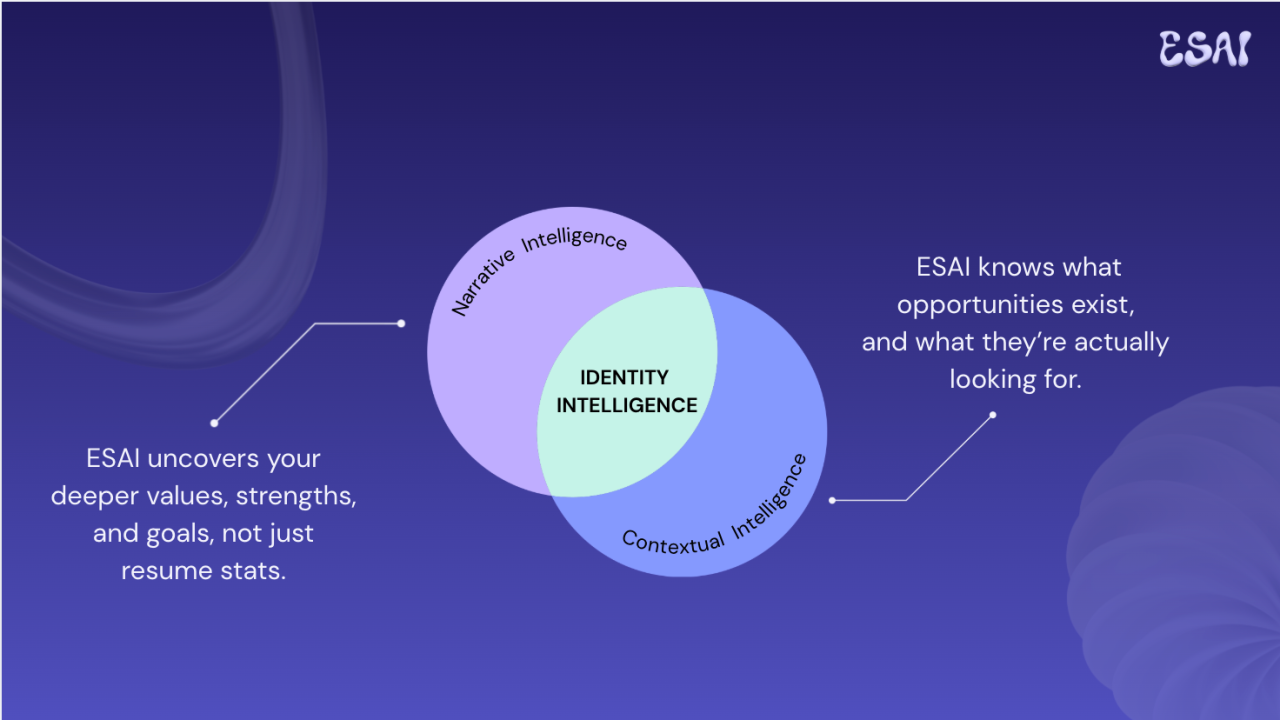
This is why self-discovery has become foundational to everything we've built at ESAI 🔮 . Before you can effectively create Narrative Intelligence or Identity Infrastructure, you have to acknowledge a simple truth: most young people haven’t been given structured space to explore who they are without the pressure of making a major life decision attached to it.
Students don’t need to be interrogated about their future. They need to be invited to talk about their present. The more they share, the clearer the pattern recognition becomes. Not because they suddenly “figured out their passion,” but because someone helped connect dots they couldn’t see from inside their own story.
Most traditional interfaces don’t make that easy. Forms are rigid. Personality quizzes are limiting. Chat bots assume pre-existing clarity. If identity has to be fully formed before you begin, many students never really begin.
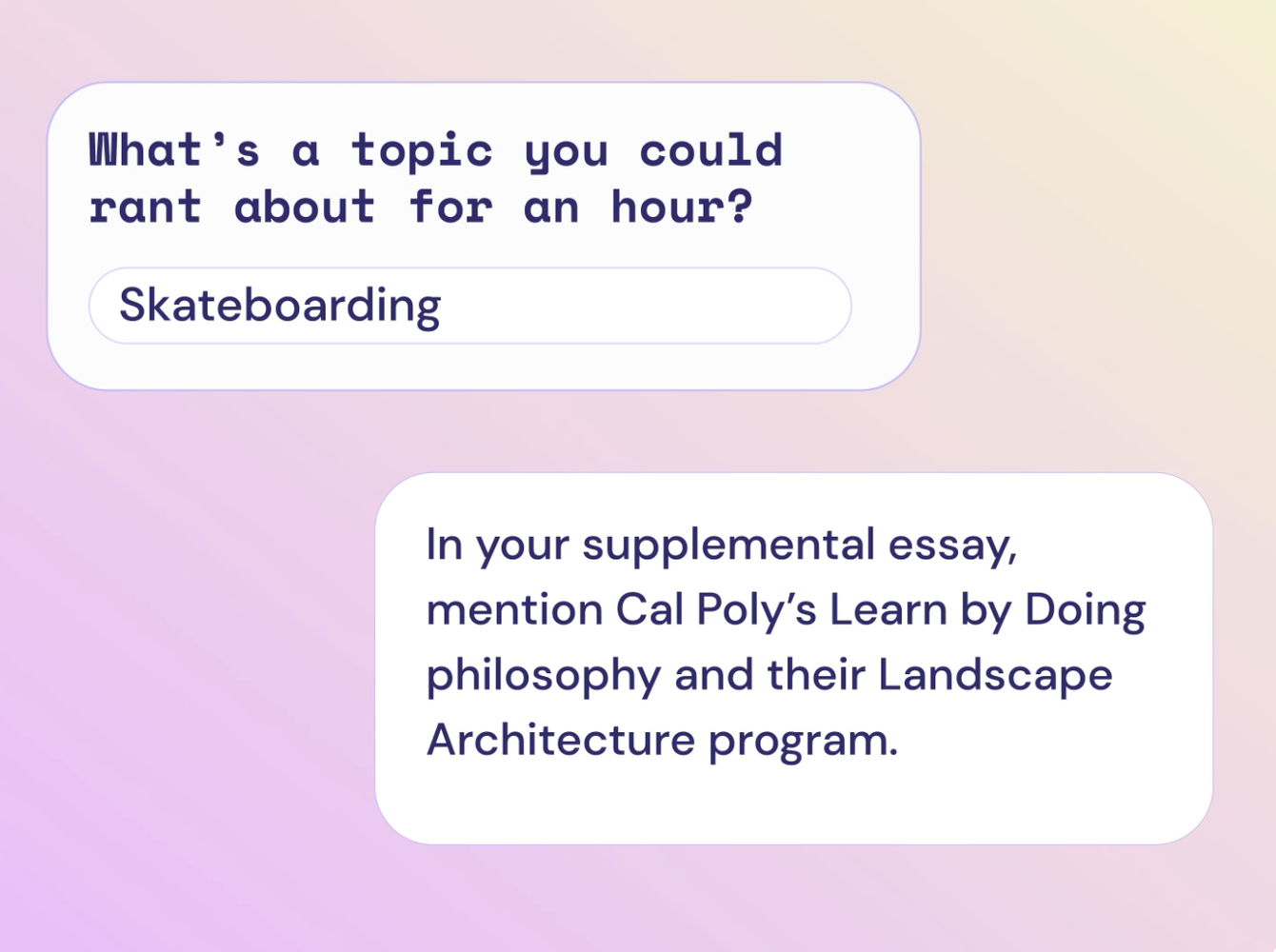
At ESAI, we've been thinking a lot about what kind of interface truly encourages sideways self-discovery — the kind that makes it natural to talk, reflect, and wander enough to surface insights a system can recognize and make deductions from.
Next week, I’ll share why I’ve come to believe voice could be the most powerful medium for that work.