
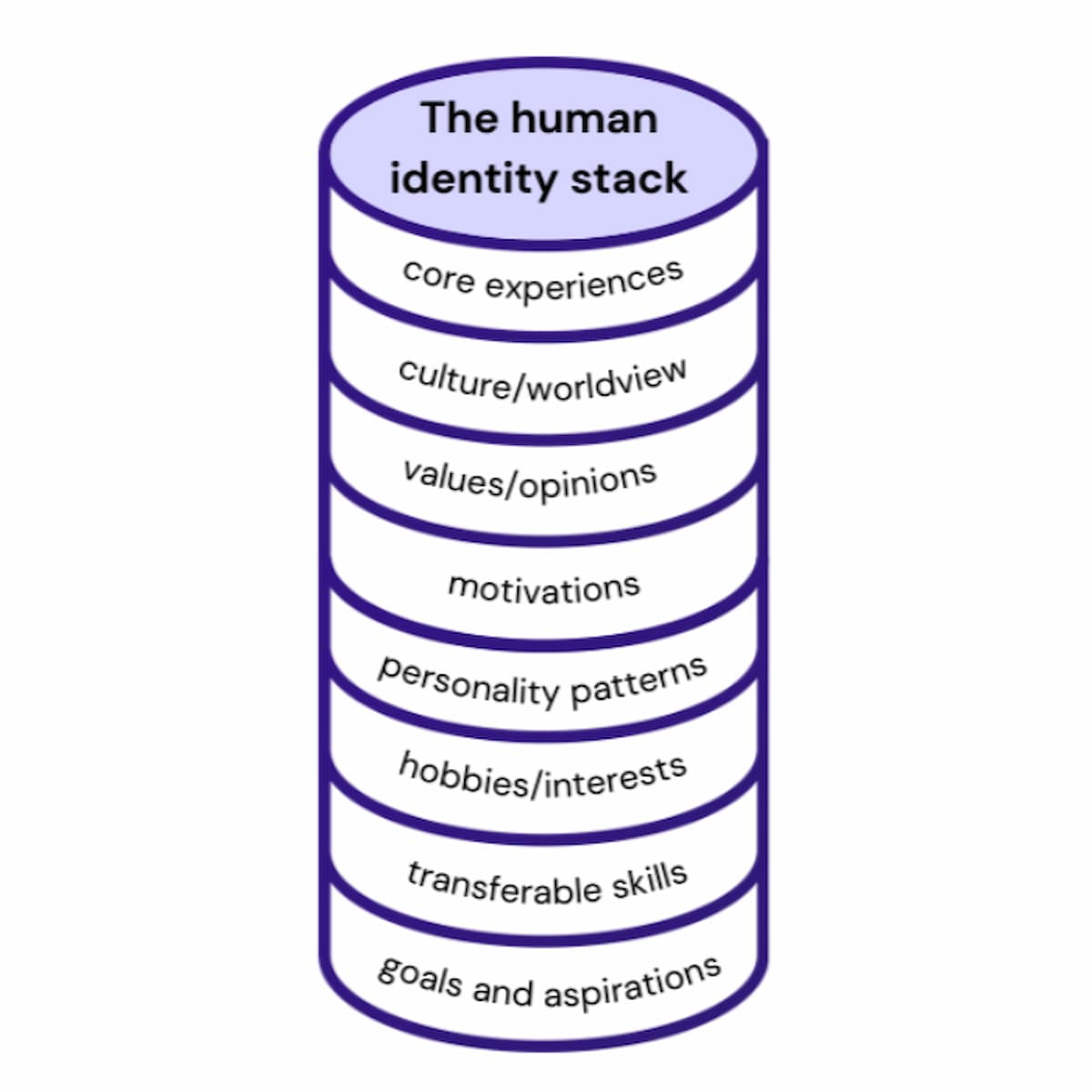
Identity infrastructure is becoming essential to the entry-level workforce
In our work with students at ESAI 🔮 and in conversations with university career services, we keep noticing the same pattern among students attempting to break into the workforce.
Questions like, “Tell me about yourself,” or “What interests you in our brand?” consistently cause hesitation, even among students who are capable, curious, and doing impressive work. AI tools are often positioned as the solution. They can help with prep and polish. But without a real foundation in self-discovery, they tend to flatten answers into something generic.
I see this when reviewing internship applications as I build my own team. Responses are often interchangeable. The language is clean, the enthusiasm sounds right, and yet nothing in the application tells me who this person actually is, how they'll work with my existing team, or why this opportunity fits them in particular.
This happens because current AI systems don’t have a source of truth about the human using them. A general language model can only work with what it’s given. Without long-term context or any built-in self-discovery, it pulls from the most common answers it’s seen before. That’s why AI-assisted responses start to sound alike.
Gen Z isn’t struggling with ability. They’re struggling with articulation.
To get something genuinely specific, a user has to do a lot of invisible work first. They need to know which parts of their identity matter, how their experiences connect, and how to translate all of that in a way that is relevant for a particular brand or role - even to a specific hiring manager. That’s a high bar, especially for students early in their careers.
What’s missing isn’t better language generation. It’s a system that helps people surface who they are before they’re asked to articulate it. I explored this idea in depth last week, when introducing identity intelligence as the missing layer between people and opportunity.

But intelligence only matters if it persists. If identity has to be rediscovered from scratch every time someone applies for a role, writes an essay, or answers “tell me about yourself,” it isn’t a system, it’s just a moment.
We've seen this before in other domains. Payments needed Stripe once money started moving digitally at scale. Communication needed Twilio once messaging became programmable. Those systems worked because they gave developers a reliable layer to build on — not the transaction itself, but the infrastructure behind it.

Identity needs the same thing — a persistent source of truth about the person. Our stories live across experiences, decisions, interests, and patterns that develop over time. Today, that information is unstructured and rarely carried forward in a way technology can understand. Students are asked to re-articulate themselves again and again, often to systems built to scan for keywords rather than recognize people.
Identity infrastructure makes that complexity usable. It lets articulation come from something real, and it gives both people and systems a better way to understand one another. That's the next digital layer we need.
The most important parts of identity are almost never the ones people think to write down. Next week, I'll share how we capture those signals sideways — without expecting young people to already have the language for who they are.